Framework
Framework
The Business Continuity Management Program is the overarching management system that establishes, implements, operates, tests, maintains, improves, and updates business continuity for the College of Registered Nurses of Alberta. It is designed to ensure the College can determine, document, and deliver its strategic products and services at or above predefined levels following an incident or disruption.
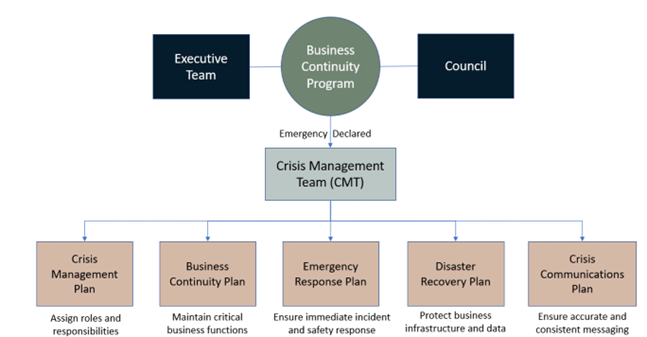
The College maintains five documents that each address a specific aspect of business continuity:
- The Business Continuity Plan contains measures to maintain essential continuity of operations, provide a framework to support regulated members, identify and plan to continue key business areas while postponing nonessential operations, and ensure the health and wellness of employees.
- The Emergency Response Plan is designed to manage incident and emergency response and recovery to ensure the safety of our staff, members, and visitors to the College.
- The Crisis Management Plan provides management structure, key responsibilities, crisis assignments and directives to follow during and immediately after a crisis.
- The Crisis Communications Plan provides guidance on crisis communications including the development of key messages, identifying potential audiences, preparing the spokesperson, recommending communication channels, and following internal communication protocols and procedures.
- The Disaster Recovery Plan contains all the information that describes CRNA’s ability to survive an Information Technology (IT) related disaster, including preventing the loss of resources such as hardware, data, and physical IT assets, and minimizing downtime related to IT.
Overview of the Business Continuity Program
The CRNA’s Council and Executive Team provide oversight to the College’s Business Continuity Program, ensuring that the organization is adequately prepared to respond to an unplanned crisis or disaster. In the event that a disruption or emergency is declared, the Crisis Management Team (CMT) is formed to coordinate the response. The Crisis Management Team will roll out the other Business Continuity plans as required.
Risk Preparedness vs. Crisis Response
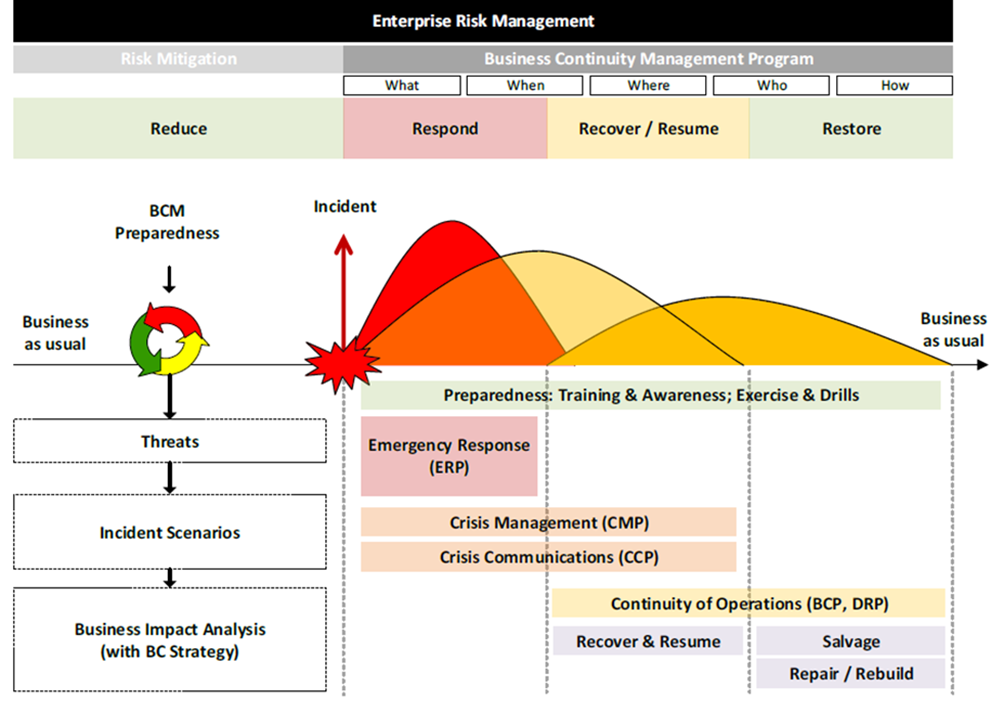
The College’s Business Continuity Strategy is broken down into three phases:
- Phase 1 - Disaster Occurrence (Respond) - This phase begins with the occurrence of the disaster event and continues until a decision is made to activate the recovery plans.
- Phase 2 - Plan Activation (Recover) - This phase continues until any virtual workplaces take effect, critical business functions re-established, and computer system service restored to the College’s departments.
- Phase 3 - Transition to Primary Operations (Restore) - Returning to normal operations (before the crisis).